Minerals Hub / Mining & Production / Why mineral-sands operations usually concentrate before they separate
Mining & Production · Ilmenite · 5 min read
Why mineral-sands operations usually concentrate before they separate
Producers and regulators usually describe two plants in sequence: a wet concentration plant that strips sand and clay from the ore, and a mineral separation plant that splits what is left into products.
Reviewed by Peter Uppal
The short version
As producers and regulators describe them, mineral-sands operations usually run two plants in sequence: a wet concentration plant (WCP) that uses gravity spirals to separate a heavy-mineral concentrate from sand and clay tailings, and a mineral separation plant (MSP) that separates that concentrate into individual mineral products. The IAEA describes the general sequence as gravity separation to produce a concentrate containing more than 95% heavy minerals, followed by magnetic and electrostatic separation processes. On this publication's reading, the order follows from volume: most of the mined sand is discarded wet, so only the concentrate has to be dried for the electrostatic step.
What the first plant does
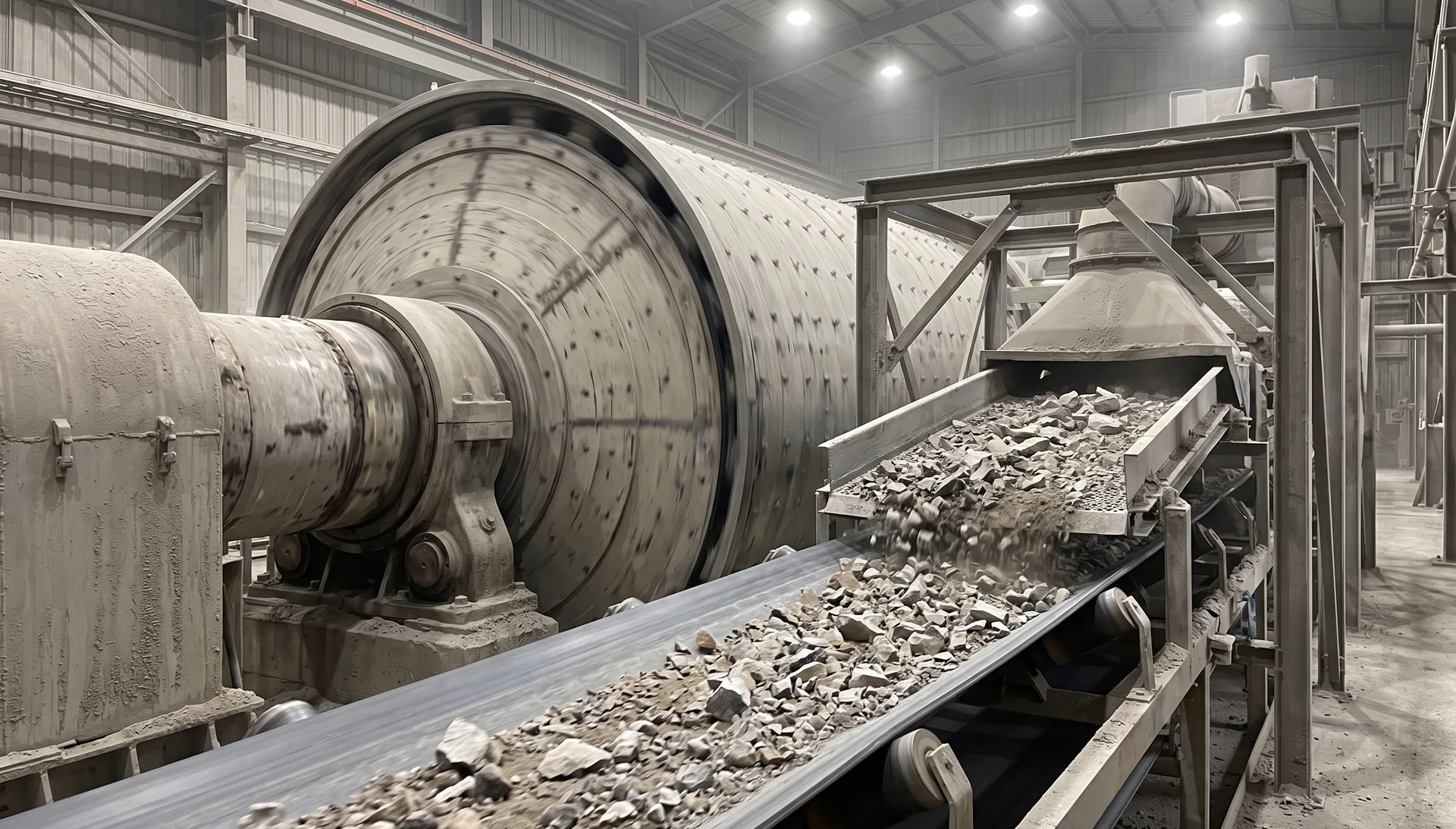
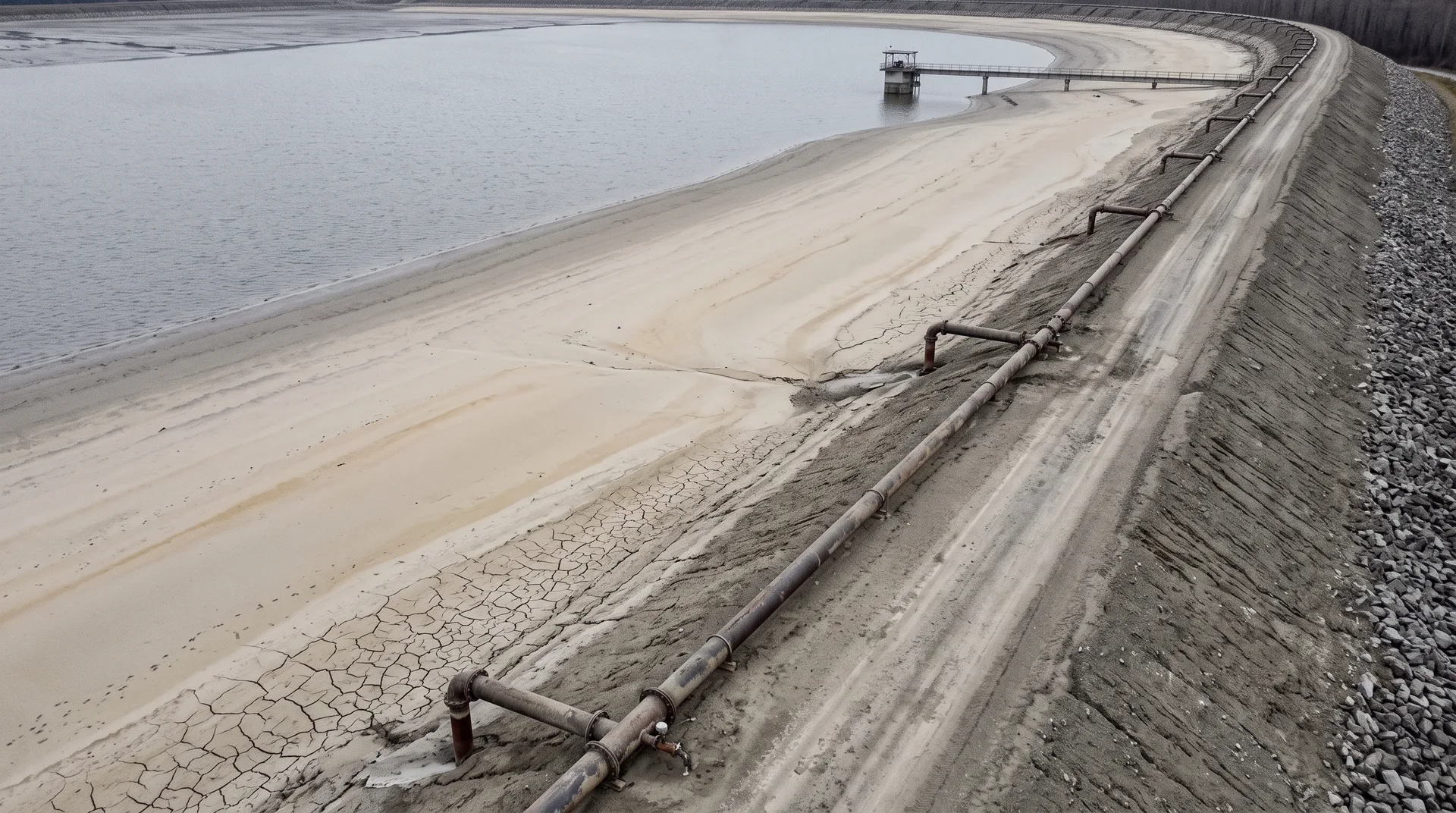
Kenmare Resources describes the first plant at its Moma mine. Kenmare says Moma predominantly uses dredges to mine almost 40 million tonnes of titanium-rich sands per year. At its wet concentrator plants, it states, the first processing stage consists of rejecting oversize material, after which progressive stages of gravity spirals then separate a heavy mineral concentrate (HMC) from sand and clay tailings. The tailings, it says, are deposited into a series of settling ponds, dried and re-contoured.
What leaves is not yet a product. Kenmare describes its HMC as ilmenite, zircon, rutile and monazite, plus other heavy minerals and a small amount of other material, mostly silica sand. Kenmare states that the HMC is pumped to the Mineral Separation Plant (MSP) and stockpiled before further processing.
Multotec, a spiral maker interviewed in the trade magazine MechChem Africa, describes a wet concentration plant as taking mined sand, mixing it with water and passing it through spiral concentrators, with rejected sand returned to the site.
Why the volume goes first
The arithmetic of a mineral-sands deposit is lopsided. According to the IAEA, heavy mineral sand deposits typically contain 1–10% heavy minerals, and gravity separation turns that into a concentrate containing more than 95% heavy minerals.
On this publication's arithmetic, turning ore of 1–10% heavy minerals into a concentrate of more than 95% means the gravity stage discards roughly 90–99% of the mass it handles, assuming every heavy grain is kept.
Some sources also place a wet magnetic step early in the sequence. The World Nuclear Association says that in the mining plant the heavy minerals are concentrated by gravity (in spiral sluices) and magnetically (for ilmenite). A 2008 conference abstract on South Africa's Namakwa Sands describes a primary processing stage, which entails wet density separation, and a secondary concentration process that comprises mainly wet magnetic separation, though the abstract does not say which building houses that step.
On the IAEA's figures, ore that typically holds 1–10% heavy minerals leaves gravity separation as a concentrate of more than 95%.
Why the second plant dries its feed
A 2006 conference paper by authors from Indian Rare Earths Ltd states that effective electrostatic separation of particles in an electric field requires dry, closely sized particles. Raghu Kumar and colleagues also report that ilmenite, rutile and leucoxene behave as conductors, and zircon, sillimanite, garnet and monazite as non-conductors, when high potential difference is applied.
The Kerala Minerals & Metals Ltd, a Kerala state undertaking, describes the sequence at its own plant. At KMML, a fluidised-bed dryer is used to remove the moisture and to maintain sand temperature at 100 degree Celsius. In KMML's dry mill, concentrate is separated into conducting and non-conducting fractions by using high-tension electrostatic separators, and the conducting fraction is further separated into magnetic (Ilmenite) and non-magnetic fraction (rich in Rutile) by magnetic separators.
Kenmare describes drying before the electrostatic step at Moma too, though there the wet magnetic step comes first: the magnetic fraction from its wet high-intensity magnetic separation (WHIMS) step is dried and then put through electrostatic separation to make ilmenite products, and, on the non-magnetic side of the WHIMS step, electrostatic separators then part the conducting mineral rutile from non-conducting zircon and monazite.
Dry handling brings its own controls. The World Nuclear Association notes the need, given radiation exposure, for special controls to protect some designated employees in dry separation plants, and for engineering programs to reduce airborne dust in the dry separation plant.
Where the pattern bends
The sequence is usually described as a wet plant followed by a dry one, but not always. Moma is one exception. Kenmare places its WHIMS step inside the separation plant, stating that HMC is fed to the Wet High Intensity Magnetic Separation (WHIMS) plant to separate magnetic from non-magnetic fractions, and that the non-magnetic fraction then passes to a wet gravity circuit that removes silica and trash minerals. At Moma, then, wet magnetic and wet gravity steps sit in the second plant, not the first.
A separation plant can also run wet steps. Western Australia's regulator describes Iluka's Narngulu plant as separating heavy mineral concentrate (HMC) into individual mineral products using gravity, magnetic and electrostatic separation processes. The regulator also records wet circuits inside the Narngulu separation plant, including a zircon wet circuit and a jig building, and in 2019 approved a plan to wash, attrition-scrub and dry Cataby concentrate there, storing it until there was enough to run through the plant as a separate campaign.
How far apart the plants sit
A Western Australian regulator's record of a proposal at Eneabba describes a dredge connected to a floating process plant producing a wet concentrate which is dried on-site prior to being railed to the Narngulu dry processing plant. In 2019, the state's regulator recorded that most of the concentrate processed at Iluka's Narngulu plant came from its Jacinth-Ambrosia mine in South Australia, alongside concentrate previously mined at Eneabba and non-magnetic concentrate from the North Capel plant.
Related
- Ore Processing
- Mining Methods
- Logistics
- Rehabilitation
- Refining
Sources
- PRIMARYInternational Atomic Energy Agency, Radiation Protection and NORM Residue Management in the Zircon and Zirconia Industries, Safety Reports Series No. 51, Vienna, 2007. s. 2.2.1, p. 7: typical heavy-mineral content of deposits; gravity concentration; magnetic and electrostatic separation of the valuable minerals, given in outline.
- PRIMARYKenmare Resources plc, 'Moma's operating process' (web page, published 24 September 2024, modified 15 May 2026). The company's description of its own mine: dredge mining and annual tonnage; wet concentrator plants (oversize rejection, gravity spirals, tailings); heavy mineral concentrate composition; mineral separation plant (WHIMS, wet gravity circuit, drying, electrostatic separation).
- PRIMARYMechChem Africa, 'Spiral separation for optimised recovery', May–June 2024, interview with Multotec. The company's description of a wet concentration plant.
- SECONDARYWorld Nuclear Association, 'Mineral Sands' (appendix to the NORM information paper), updated 5 June 2025. Gravity and magnetic concentration in the mining plant; radiation and dust controls in dry separation plants.
- PRIMARY'Geometallurgical Challenges of Namakwa Sands: A South African Titanium-Zirconium Heavy Minerals Mine', ICAM 2008, Ninth International Congress for Applied Mineralogy (AusIMM), 2008. Abstract: primary processing by wet density separation; secondary concentration mainly by wet magnetic separation.
- PRIMARYRaghu Kumar, C., Daniel, F., Murty, V.S. and Suresh Kumar, S. (Indian Rare Earths Ltd), 'Effect of Process Variables on High-Tension Separation: A Statistical Approach', International Seminar on Mineral Processing Technology, Chennai, 2006, pp. 559–563. p. 559: feed requirements for electrostatic separation; conducting and non-conducting behaviour of the heavy minerals under high potential difference.
- PRIMARYThe Kerala Minerals & Metals Ltd (Government of Kerala undertaking), 'Manufacturing Facility: Mineral Separation Unit', web page, undated. The company's description of its dryer plant and dry mill.
- PRIMARYDepartment of Water and Environmental Regulation, Western Australia, Works Approval W6215/2019/1, Decision Report, 14 March 2019, applicant Iluka Resources Ltd, premises Narngulu Mineral Separation Plant. pp. 1–2: purpose of the premises; sources of concentrate processed; existing zircon wet circuit and jig buildings; approved washing, attritioning and drying of Cataby concentrate.
- SECONDARYEnvironmental Protection Authority, Western Australia, Eneabba West Mineral Sands Project, Assessment No. 211, EPA Report No. 403, proponent AMC Mineral Sands Limited. A dredge and floating process plant producing a wet concentrate, to be dried on site and railed to the Narngulu dry processing plant.
- ANALYSISANALYSIS: the mass arithmetic from the IAEA's typical ore content (1–10% heavy minerals) and concentrate grade (more than 95% heavy minerals), assuming every heavy grain is recovered; the reading that the order of the two plants follows from that volume; and the reading that discarding most of the mass wet leaves only the concentrate to be dried for electrostatic separation. This publication's framing.Non-public document · no public URL