Minerals Hub / Companies & Organisations / Who supplies the separators in a mineral-sands plant
Companies & Organisations · 4 min read
Who supplies the separators in a mineral-sands plant
A reading of the public record on who offers the spirals, magnetic separators and electrostatic separators a mineral-sands plant buys, and of what that record can and cannot say about how concentrated the supply is.
Reviewed by Peter Uppal
The short version
On this publication's tally of the English-language sources it read, the firms that recur in mineral-sands separation are Mineral Technologies (Downer), Metso, Eriez and Multotec, with SLon high-gradient machines in ilmenite; this is not a market census. The record on each firm is mostly its own brochures, releases and interviews, so every description of reach or performance here belongs to the company or author that made it. No source read gives a market share or a measure of how concentrated the supply is.
Three families of machine
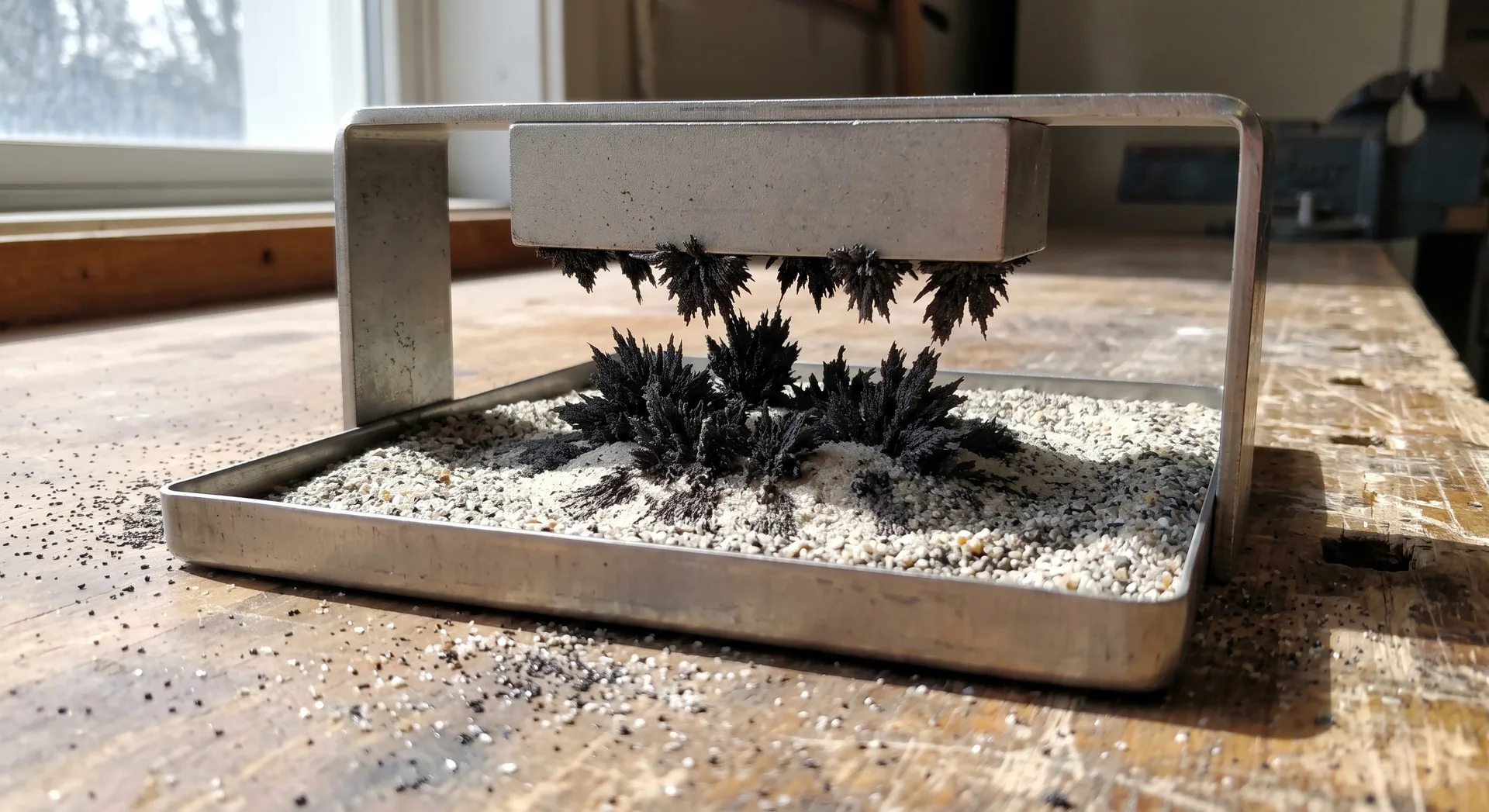
A mineral-sands plant parts one heavy mineral from another in stages, and the machines fall into three families. Spirals are gravity separators; Mineral Technologies sells its own as MD gravity spirals. Magnetic separators pull out the grains that respond to a field. Eriez's brochure for its rare-earth roll describes the principle: the paramagnetic, or weakly magnetic, particles are attracted to the roll and are deflected out of the non-magnetic particle stream. Electrostatic separators part grains that conduct from grains that do not; Mineral Technologies' Carrara brochure says its machines suit dry, free-flowing feeds of about 40 to 800 µm that exhibit electrical conductivity differences. Which minerals fall on which side of each test is the subject of How two properties sort four minerals.
The record used here is English-language material: company brochures, releases, company-supplied articles and interviews, and one conference abstract. It does not cover Chinese manufacturers. What follows takes the firms one at a time.
Mineral Technologies: all three families under one name
Downer's 2025 annual report says that through its Mineral Technologies business, Downer is "a leading provider of fine physical mineral separation solutions".
The firm's undated corporate brochure, which calls it a Downer subsidiary, lists gravity separators, electrostatic separators and magnetic separators among its equipment, and mineral sands among its sectors. Two undated brochures, branded "CPG Resources – Mineral Technologies", fill in the detail. Its Carrara electrostatic range includes high-tension roll, plate, screen and tribostatic separators, and the company lists titaniferous mineral sands, ilmenite and rutile among high-tension roll applications. Its spiral brochure lists rutile, ilmenite and zircon concentration among applications and says the design draws on experience from "hundreds of plant installations in major mining operations around the world".
Trade press in 2022 reported that the company's WW7 spirals are made at its ISO 9001:2015-accredited Australian manufacturing facility. In a January 2025 interview with Global Business Reports, a Mineral Technologies manager said that for Namakwa Sands and Richards Bay Minerals it supplied "nearly all of the separation equipment, from spirals to magnetic separators".
"Supplied nearly all of the separation equipment, from spirals to magnetic separators." (a Mineral Technologies manager, 2025, on Namakwa Sands and Richards Bay Minerals)
An Outotec release from 2007
The oldest document in this set is a press release. In 2007 Outotec was contracted to design and expand Sierra Rutile's processing plants; its release names Outotec spirals, rare-earth roll magnetic separators and eForce high-tension electrostatic separators in the expanded plant. The release gives Outotec the design and the implementation of the project.
Metso's current material
The Metso material read here covers two of the families. Its spiral concentrator page, last updated in August 2026, lists mineral sands among the minerals its spirals suit. Its 2024 brochure for the SLon vertically pulsating high-gradient magnetic separator lists, among applications, concentration of iron ore, ilmenite, chromite ore and other paramagnetic materials. The brochure says Metso offers SLon units. Metso says that thousands of SLon units have been implemented in minerals processing plants worldwide; that count is not specific to mineral sands.
SLon machines also appear in the conference literature. A paper in the AusIMM Iron Ore 2017 proceedings describes applications of SLon separators in ilmenite processing flowsheets, and its abstract, by X. Dahe, credits them with high efficiency.
Eriez: magnetic first
Eriez's 2016 brochure for its rare-earth roll magnetic separator names heavy mineral sands among applications, listing ilmenite and leucoxene, with a particle-size table that also includes rutile, zircon, staurolite and monazite.
The firm's own account of its history starts with magnets. In a 2014 interview its chief executive said the company's roots are in wet and dry magnetic separation, and that over the previous two decades it had added gravity-based, electrostatic and flotation concentration.
Multotec: spirals
Multotec appears in this record through one product. A company-supplied article from 2023 says Multotec, which it calls a process equipment specialist, developed a 12-turn heavy-minerals spiral, the HM12, for a mineral-sands customer that wanted higher recoveries. The same article says the spiral was designed and tested in-house, evolving from the company's NHM heavy minerals spiral.
What the record can carry
On this publication's reading, the record supports a list rather than a measure: four firms, and the SLon design that Metso offers, recur, and nothing in the record ranks the firms by size. What it does show is which firms offer which families of machine, from Mineral Technologies' spirals, magnetic and electrostatic separators to Eriez's rare-earth roll and Multotec's heavy-minerals spiral, and it names some of the plants those machines went to: Namakwa Sands, Richards Bay Minerals and Sierra Rutile.
Related
- Equipment Suppliers
- Processing Technology
- Ore Processing
- Technology Providers
- Processing Innovation
Sources
- PRIMARYDowner EDI Limited, 2025 Annual Report (year ended 30 June 2025), Industrial & Energy section, p. 18 (printed; PDF p. 19): Mineral Technologies business described as a provider of fine physical mineral separation solutions. Company usage.
- PRIMARYMineral Technologies (a Downer subsidiary), corporate brochure, undated, hosted in the AusIMM Minerals Processing Toolbox. Equipment categories (gravity, electrostatic and magnetic separators among them) and market sectors (mineral sands among them). Company usage.
- PRIMARYCPG Resources – Mineral Technologies, 'Carrara electrostatic separators' brochure, undated, hosted in the AusIMM Minerals Processing Toolbox. p. 2: the range (high tension roll, electrostatic plate, electrostatic screen and tribostatic separators); feed description and particle-size range; high tension roll applications. Company usage.
- PRIMARYCPG Resources – Mineral Technologies, 'MD gravity spirals' brochure, undated, hosted in the AusIMM Minerals Processing Toolbox. p. 3: applications, including rutile, ilmenite and zircon concentration; design experience statement. Company usage.
- SECONDARYGlobal Business Reports, interview with Mineral Technologies' regional manager for Africa, January 2025: separation equipment supplied for Namakwa Sands and Richards Bay Minerals. A company statement in an interview.
- SECONDARYInternational Mining, 'Mineral Technologies adds to MD spirals range with WW7', 19 March 2022. Trade press reporting company information on where the WW7 spiral is made.
- PRIMARYOutotec Oyj, press release 'Outotec expands heavy mineral sands processing plants in Sierra Leone', 24 May 2007, archived on metso.com. Design and expansion of Sierra Rutile's land-based processing plants; Outotec technologies named in the expanded plant. Company usage.
- PRIMARYMetso, 'Spiral concentrator' product page, last updated August 2026: minerals the spirals suit, mineral sands among them. Company usage.
- PRIMARYMetso, 'SLon® vertically pulsating high-gradient magnetic separator' brochure, code 4990-01-24-EN-MNG, © 2024: description of the machine; applications including ilmenite; statement on units in use. Company usage.
- SECONDARYDahe, X., 'Recent development and application of SLon vertical ring and pulsating high gradient magnetic separators in the iron ore and ilmenite processing industries', Proceedings Iron Ore 2017, AusIMM. Abstract only; the full paper was not read; author affiliation not shown on the page.
- PRIMARYEriez Magnetics, 'Rare Earth Roll Magnetic Separator: Dry High Intensity' brochure MMPB-730N, © 2016: operating principle; heavy mineral sands applications (ilmenite, leucoxene) and sizing table. Company usage.
- SECONDARYSkillings Mining Review, interview with the President and CEO of Eriez, April 2014, pp. 6–8: the company's roots in magnetic separation and its expanded product line. A company statement in an interview.
- SECONDARYMining Weekly, 'Multotec's 12-turn spiral goes to work in mineral sands', 26 June 2023. A company-supplied article ('This article has been supplied'); the same text also ran in MechChem Africa, 28 July 2023.
- ANALYSISANALYSIS: the tally of firms that recur in mineral-sands separation across the English-language sources listed here, made by this publication. It reflects what those sources contain, not the market; Chinese manufacturers were not researched.Non-public document · no public URL