Minerals Hub / Sustainability / The energy a hard ore costs
Sustainability · 4 min read
The energy a hard ore costs
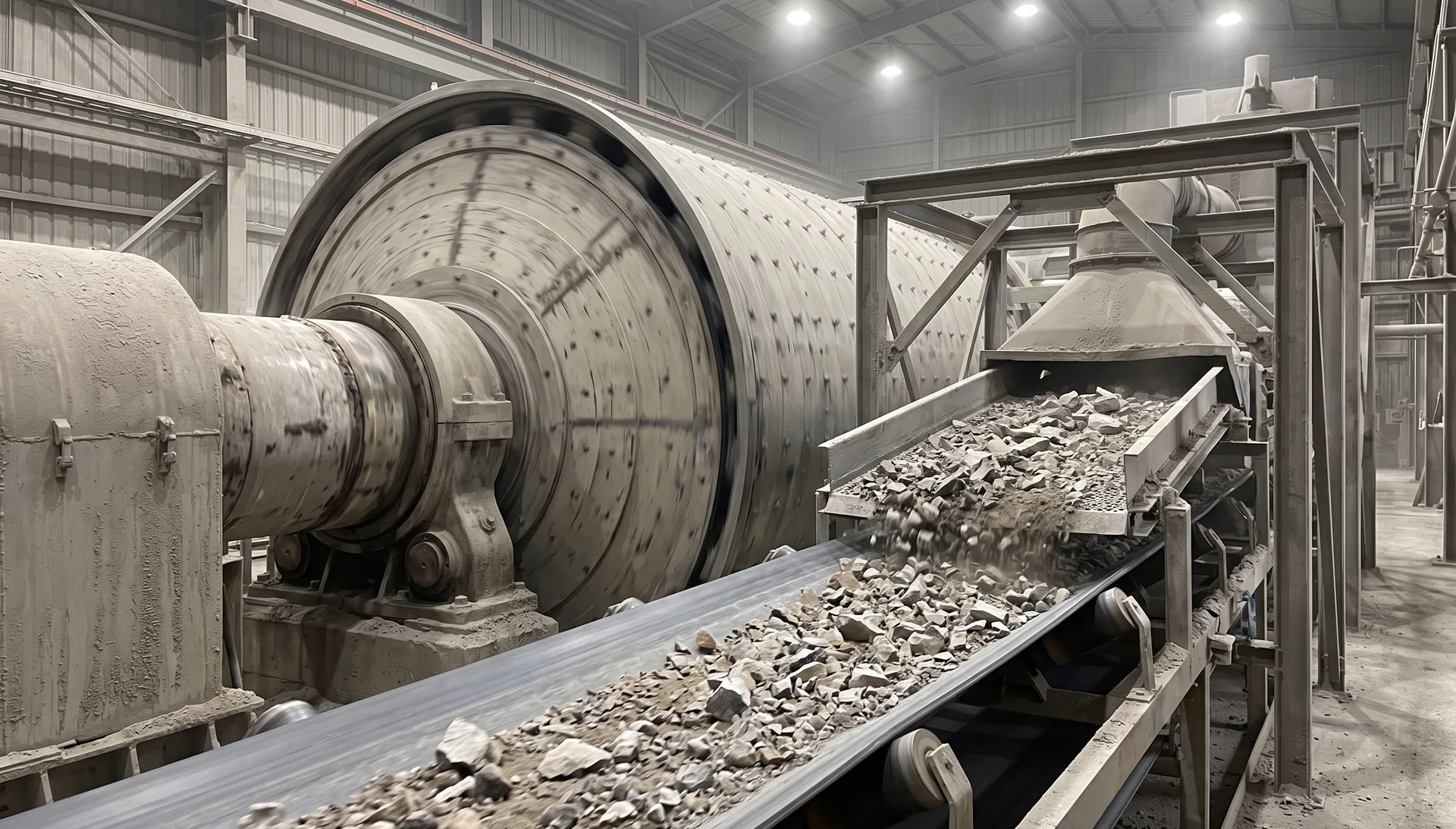
Crushing and grinding are among the largest energy uses in US mining on one government count, and the published estimates of how large differ in what they measure; this piece sets them out with their bases, and shows which steps loose sands avoid.
Reviewed by Peter Uppal
The short version
Published estimates of comminution's (crushing and grinding's) share of energy run from typically 25% of mining's final energy consumption, in a Weir-commissioned report of 2021, to up to 70% of a plant's energy in some hard-rock cases, in figures a 2024 review reports from earlier work. A US Department of Energy study of year-2000 data found grinding the largest energy-consuming equipment type in US mining (excluding oil and gas, counting electricity losses), at 40%. USGS describes heavy-mineral sands as generally easy to excavate, sparing the costs of blasting, rock crushing and grinding. By USGS's account of that advantage, a consolidated ore that needs blasting and crushing does not get that saving.
How big the bill is, by one government count
One government study breaks the total down by equipment. The US Department of Energy's Mining Industry Energy Bandwidth Study, prepared in June 2007 using year-2000 data, found that US mining, excluding oil and gas, consumes approximately 1,246 trillion Btu a year. Within that year-2000 US total, the largest energy consuming equipment types are grinding (40%) and materials handling (17%), counting the energy lost in generating the electricity. The study counts crushing separately; on this publication's arithmetic from its own tables, crushing and grinding together come to about 44% of US mining energy in 2000.
The DOE study estimated that investments in state-of-the-art equipment and further research could reduce energy consumption to 579 trillion Btu a year, against a theoretical minimum of 184 trillion Btu a year, a value the study says it could not source as a single figure, because of the wide variability in mining processes.
The share depends on what it is a share of.
How efficiently it is used
The DOE study also looked at how efficiently that energy is used. It notes that estimates of crushing and grinding efficiency vary widely with the metric used, whether new surface area per unit of energy or the motor efficiency of the equipment. For grinding, it reports that 1% efficiency was found to be the most common estimate in the literature it compiled, while the same table gives a current crushing efficiency of 50%, reported by AOG (2005).
A 2012 paper to the International Mineral Processing Congress also describes comminution's energy use as substantial. Its abstract says the crushing and grinding steps in the mineral processing of ores represent a substantial proportion of total energy, and, citing Fuerstenau and Abouzeid (2002), that current practices of breaking rocks in tumbling mills are relatively inefficient.
Why hardness raises it
One index links hardness and energy. A 2024 review in Minerals states that the Bond Work Index directly correlates with the energy required to reduce an ore to a specific particle size, and that the index can also be estimated from ore characteristics including density and ore hardness, a point it draws from a 2016 study.
The Minerals review reports that comminution typically accounts for 30% to 50% of the total energy used in the plant, depending on the material and process, and that in some cases, such as in hard rock mining, this figure can reach up to 70%. Those figures come from works it cites dating from 1996 to 2014, not from new measurement.
The range, and who publishes it
The other figures come from an equipment maker. Mining Energy Consumption 2021, a report commissioned by the Weir Group, which sells comminution equipment, found comminution typically accounting for 25% of mining's final energy consumption, as reported by Engineering & Mining Journal. In December 2023, a Weir study presented at a COP28 panel said comminution consumes around 3% of the world's electrical power each year and is responsible for at least one-third of an average mine's energy use and CO2e emissions.
The two Weir figures, typically 25% in 2021 and at least one-third in 2023, come from the same company and are not reconciled in what was published. On this publication's reading, the spread across all these numbers is largely, though not wholly, a spread of denominators: the DOE's 40% is grinding's share of US mining energy in 2000, Weir's 25% is a share of mining's final energy, its one-third is a share of an average mine, and the review's 30–50% is a share of a processing plant.
What loose sand spares
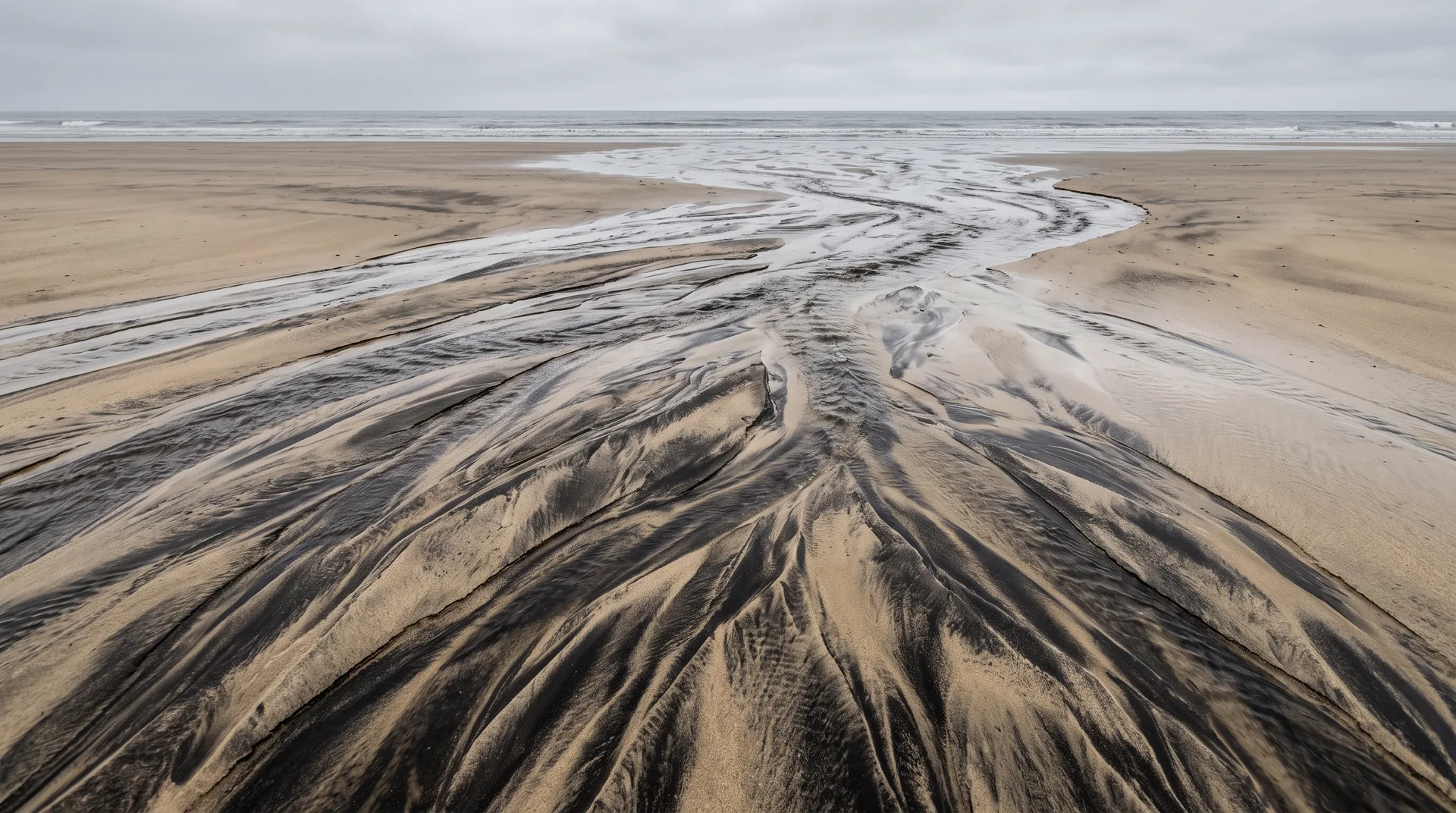
The contrast with mineral sands starts with the deposit. The USGS deposit model says heavy-mineral sands deposits are relatively easy to mine because they are weakly to poorly consolidated. The resulting sands are typically well sorted, medium- to fine-grained, well-rounded, and not indurated. Among the advantages USGS lists, these deposits are generally easy to excavate, which spares costs associated with blasting, rock crushing, and grinding. By USGS's own account of that advantage, a consolidated ore that needs blasting and crushing does not get that saving.
Related
- Ore Processing
- Processing Technology
- Environmental Management
- Mining Methods
- Processing Innovation
Sources
- PRIMARYVan Gosen, B.S., Fey, D.L., Shah, A.K., Verplanck, P.L., and Hoefen, T.M., 2014, Deposit model for heavy-mineral sands in coastal environments: U.S. Geological Survey Scientific Investigations Report 2010–5070–L. Printed p. 1: relatively easy to mine because weakly to poorly consolidated. Printed p. 4: generally easy to excavate, sparing costs of blasting, rock crushing and grinding. Printed p. 6: sands typically well sorted, medium- to fine-grained, well-rounded and not indurated (citing Force, 1991).
- PRIMARYU.S. Department of Energy, Industrial Technologies Program, Mining Industry Energy Bandwidth Study (prepared by BCS, Incorporated, June 2007), year-2000 data, US mining excluding oil and gas. Printed p. 1, Exhibit 1: current, practical-minimum and theoretical-minimum energy use. Printed p. 3: no single theoretical minimum could be sourced. Printed p. 12 and p. 39 (Appendix B): crushing and grinding efficiency estimates. Printed p. 22, Exhibit 17: energy use by equipment type, values accounting for electricity losses. Printed p. 35, Appendix A: grinding and crushing in trillion Btu a year.
- SECONDARY'Energy Reduction Through Eco-Efficient Comminution Strategies', XXVI International Mineral Processing Congress (IMPC 2012), New Delhi, September 2012, abstract as listed on OneMine (no individual authors listed there). The tumbling-mill line is attributed in the abstract to Fuerstenau and Abouzeid (2002).
- SECONDARYEngineering & Mining Journal, 'New report defines mining's energy intensity' (undated web page), reporting Mining Energy Consumption 2021, a report commissioned by the Weir Group plc, a maker of comminution equipment.
- SECONDARYGlobal Mining Review, 'New study by Weir highlights energy saving opportunity in mining', December 2023, reporting a Weir study presented at a COP28 panel discussion (the same wording carried by Mining Weekly, 6 December 2023). Company material, methodology not described.
- SECONDARYNikolić, V., Sanchez Ferradal, P., Medina Pierres, J., Menéndez-Aguado, J.M. and Trumić, M., 'Methods for Estimating the Bond Work Index for Ball Mills', Minerals 2024, 14(12), 1264, doi:10.3390/min14121264. §1 Introduction: comminution's share of plant energy, reporting Napier-Munn et al. (1996), Wills (7th ed.) and Ballantyne and Powell (2014); the Bond Work Index and energy to reach a given size. §3: estimating the index from ore characteristics, citing Chandar, Deo and Baliga (2016).
- ANALYSISANALYSIS: the DOE crushing-plus-grinding share (52 + 494 of 1,246 trillion Btu a year, about 44%, year-2000 data) computed by this publication; and the reading that the spread of published comminution shares is largely, though not wholly, a spread of denominators.Non-public document · no public URL