Minerals Hub / Sustainability / Where the radiation risk sits in a mineral-sands plant
Sustainability · Monazite · 6 min read
Where the radiation risk sits in a mineral-sands plant
Monazite carries thorium, separation gathers the monazite into fewer and fewer streams, and, the IAEA says, high radionuclide concentrations go with it; this piece follows that stream through a plant using IAEA and regulator guidance.
Reviewed by Peter Uppal
The short version
Monazite is a phosphate of rare earth elements and thorium, and IAEA guidance says the magnetic and electrostatic separation steps in a mineral-sands plant can be associated with high radionuclide concentrations because of minerals other than zircon, notably monazite. Zircon carries radioactivity of its own: an IAEA report puts commercial zircon mostly at 2–4 Bq/g for uranium-238 series and 0.4–1 Bq/g for thorium-232 series radionuclides, against typically 140–250 Bq/g thorium-232 for monazite in another, on this publication's reading of the two. Australia's radiation regulator, ARPANSA, says the highest exposure risk lies in dry-plant separation and in handling monazite, predominantly through inhaled dust.
What monazite carries
USGS describes monazite, (Ce,La,Nd,Th)PO₄, as a source of rare earth elements as well as thorium, and the IAEA's report on the zircon industries calls it a phosphate of rare earth elements and thorium. ARPANSA says mineral sands contain trace quantities of uranium and thorium, particularly monazite.
The IAEA's 2012 report on the titanium dioxide and related industries gives typical activity concentrations for monazite of 140–250 Bq/g for thorium-232 and 6–40 Bq/g for uranium-238. A becquerel per gram (Bq/g) measures how much radioactive decay takes place in a gram of material.
The IAEA reports cited here treat these materials under the heading of naturally occurring radioactive material, or NORM. The zircon-industries report (SRS 51), citing an IAEA Safety Guide, holds that it is usually unnecessary to regulate material with natural radionuclides below 1 Bq/g in the uranium and thorium decay series. National regulations may use that value to define their scope. The IAEA also notes situations, such as some building materials, that call for consideration below it.
Zircon carries some radioactivity too. A separate IAEA report states that activity concentrations of uranium-238 and thorium-232 series radionuclides in commercial zircon fall mostly in the ranges 2–4 and 0.4–1 Bq/g, respectively. Commercial zircon's uranium-238 series activity, mostly 2–4 Bq/g, is therefore above the 1 Bq/g level described above. On this publication's reading of the two IAEA reports, monazite's thorium-232 range is far higher again.
Separation moves the hazard
The IAEA's mineral-sands annex distinguishes primary from secondary separation. For the first, it finds that exposures arising from the mining and primary separation processes are of no significant concern because activity concentrations in the process materials are low, and that during primary separation the moisture content of the heavy mineral concentrate prevents any significant dust generation.
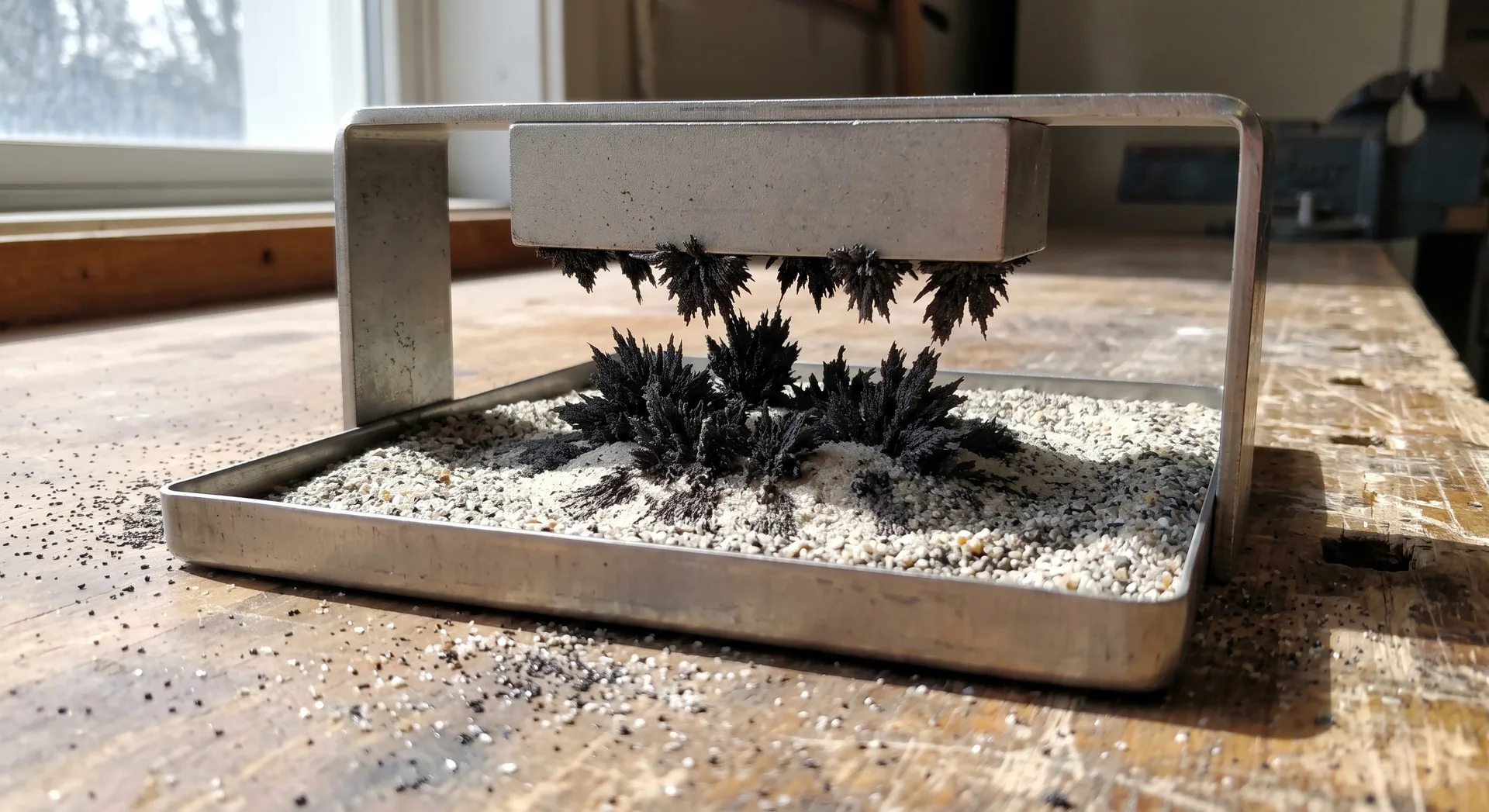
The IAEA discusses secondary separation alongside what it calls dry separation plants. The zircon-industries report notes that the magnetic and electrostatic separation processes can be associated with high radionuclide concentrations because minerals other than zircon are present, notably monazite. The mineral-sands annex describes the mechanism: after ilmenite is removed, often first, the remaining non-magnetic fractions are progressively enriched with monazite (non-magnetic, that is, at the step that removes ilmenite; see Magnetic separation matches field strength to the mineral).
ARPANSA: "Dry plant separation processes and the processing, handling and storage of monazite carries the highest exposure risk"
The same annex lists the materials whose activity concentrations extend, or may extend, beyond 1 Bq/g: heavy mineral concentrate, ilmenite, zircon, monazite, xenotime and leucoxene, and all residues from the secondary separation process, while all residues from the primary separation process are typically less than 1 Bq/g. The IAEA states that once zircon is separated from ilmenite, rutile and monazite, the radiological risk is much lower, because their high radionuclide concentrations are absent.
On this publication's reading, that is where the risk sits: it follows the monazite, and each secondary separation step gathers it into a smaller, more concentrated stream.
How workers are exposed
ARPANSA describes two routes, with exposure coming externally from gamma radiation or internally from the inhalation of ore and process dusts. The IAEA names the same two as the pathways most likely to require consideration, adding that consideration of radon and thoron inhalation may also be necessary during the exploitation of certain minerals. For dry separation of mineral sands, it says high concentrations of thoron and radon progeny are unlikely, owing to low emanation from the process material, short half-lives and good ventilation, so that the inhalation of thoron and radon is not usually an exposure pathway of concern.
ARPANSA names where it peaks: dry plant separation processes and the processing, handling and storage of monazite carries the highest exposure risk, predominantly from the inhalation of dust. The IAEA weighs both routes in that part of the plant. It says that inhalation of airborne dust is a major exposure pathway in dry separation plants, because the heavy-mineral concentration is higher and the need for free-running material can raise significant airborne dust. It adds that external exposure can be an important pathway where monazite is handled in significant concentrations, typically where monazite is more than 0.5% of the total mineral content.
How plants manage it
A millisievert (mSv) measures the radiation dose a person receives. Australia's annual dose limits, ARPANSA states, are 1 mSv for the public and 20 mSv for occupationally exposed workers. The IAEA records that annual effective doses from dust inhalation in dry separation plants have, in the past, regularly reached some tens of millisieverts, and are now as low as about 1 mSv in well managed plants, after lower monazite production and improved engineering and administrative controls. It still holds that comprehensive monitoring programmes and a mix of engineering and administrative controls are still required in dry separation plants.
ARPANSA's controls follow the hierarchy of control: minimising time, increasing distance and shielding can reduce gamma exposure, ventilation is critical for the inhalation pathway, and respiratory protection may be needed as an additional control. In Australia, operators of each mineral sand mine and mill are required to have an approved Radiation Management Plan.
Where the residues go
New South Wales guidance from 2009 says residues from mineral-sand processing often contain an elevated level of radioactivity, due to the removal of the non-radioactive portion of the mineral sand. It says those residues are "generally associated with either the mineral monazite, which is a thorium and rare-earth phosphate, or the dense mineral zircon and other dense minerals such as rutile (titanium dioxide)", and that the blended material should be sent back to the mine site for backfilling under a licence amended for waste disposal by application to land.
The IAEA's annex describes the same practice: monazite is treated as a residue if there is no intention of recovering the mineral content, residues go to disposal areas at the mine site, usually the mining void, and monazite, because of its relatively high radioactivity content, is blended with tailings prior to disposal.
Related
- Environmental Management
- Community Engagement
- Regulation
- Ore Processing
- Logistics
Sources
- PRIMARYVan Gosen, B.S., Fey, D.L., Shah, A.K., Verplanck, P.L., and Hoefen, T.M., 2014, Deposit model for heavy-mineral sands in coastal environments: U.S. Geological Survey Scientific Investigations Report 2010–5070–L. Printed p. 1, Abstract: monazite [(Ce,La,Nd,Th)PO₄] as a source of rare earth elements and thorium.
- PRIMARYInternational Atomic Energy Agency, Radiation Protection and NORM Residue Management in the Zircon and Zirconia Industries, Safety Reports Series No. 51, Vienna, 2007 (STI/PUB/1289). Printed p. 7, §2.2.1: monazite as a phosphate of rare earth elements and thorium; magnetic and electrostatic separation and radionuclide concentrations; lower radiological risk after zircon is separated. Printed p. 24, §3.1.1: the 1 Bq/g value from the IAEA Safety Guide and its caveat. Printed p. 30, §3.2.2(a): activity concentrations in commercial zircon.
- PRIMARYInternational Atomic Energy Agency, Safety Reports Series No. 76 (2012), radiation protection and NORM residue management in the titanium dioxide and related industries. §3.1.2.1 (printed pp. 13–14): exposure pathways. Annex I on mineral sands, printed pp. 99–102: monazite treated as a residue and blended with tailings; process materials above and below 1 Bq/g; enrichment of non-magnetic fractions with monazite; exposure in primary and secondary separation; Table I–1 activity concentrations; doses in dry separation plants; thoron and radon; monitoring and controls.
- PRIMARYAustralian Radiation Protection and Nuclear Safety Agency (ARPANSA), 'Occupational exposure: mineral sand' web page (undated). Trace uranium and thorium, particularly in monazite; external and internal exposure; highest exposure risk in dry plant separation and monazite handling; annual dose limits; hierarchy of control; Radiation Management Plans.
- PRIMARYDepartment of Environment and Climate Change NSW, Guidance for Licensing of Mineral-sand Mining that Generates Radioactive Residues, June 2009 (DECC 2009/354). §1, p. 1: minerals associated with radioactive residues. §3, pp. 1–2: elevated radioactivity in residues; return of blended material to the mine for backfilling.
- COMMON-KNOWLEDGECOMMON-KNOWLEDGE: the units used here. Becquerels per gram (Bq/g) measure how much radioactive decay takes place in a gram of material; millisieverts (mSv) measure the radiation dose received by a person.Non-public document · no public URL
- ANALYSISANALYSIS: the framing that a mineral-sands plant's radiation risk follows the monazite stream, so that each secondary separation step moves the hazard into a smaller, more concentrated stream; and the comparison of zircon and monazite activity concentrations taken from two different IAEA reports.Non-public document · no public URL