Minerals Hub / Markets & Economics / What moves zircon demand
Markets & Economics · Zircon · 5 min read
What moves zircon demand
Zircon goes into tiles, furnace linings, casting moulds and zirconium chemicals, and this piece follows each use to the part of the economy it answers to and to the sources that publish the split.
Reviewed by Peter Uppal
The short version
USGS's Mineral Commodity Summaries 2026 names ceramics as the leading end use for zircon in the United States in 2025, with foundry sand, refractories and zirconium chemicals as its other primary uses. On this publication's reading, those uses depend on different parts of the economy, and Iluka's reporting on 2025 linked ceramics demand to China's property sector and US foundry demand to industrial activity. The only percentage split of zircon demand used here comes from a May 2025 Iluka presentation, sourced to Iluka and TZMI, which states no year for it.
An order of uses, not a set of shares
USGS's current edition reports that in the United States in 2025 the leading end use for zircon was ceramics, and that other primary uses of zircon included foundry sand, refractories, and zirconium chemicals. The list changes between editions. The 2025 edition, now superseded, named, for the United States in 2024, ceramics, foundry sand, opacifiers and refractories as the leading end uses, with abrasives, chemicals, metal alloys and welding rod coatings as other end uses.
For the world, the USGS ranking comes from an older document. Its 2020 Minerals Yearbook chapter, released in February 2025 with 2020 data, ranked zircon's leading end uses globally, in descending order of quantity, as ceramics, refractories and foundry, then zirconium-based chemicals and "fused zirconium", and other applications, "fused zirconium" being USGS's own wording in that sentence. That is an order of quantity with no percentages attached.
Ceramics: an optical job tied to building
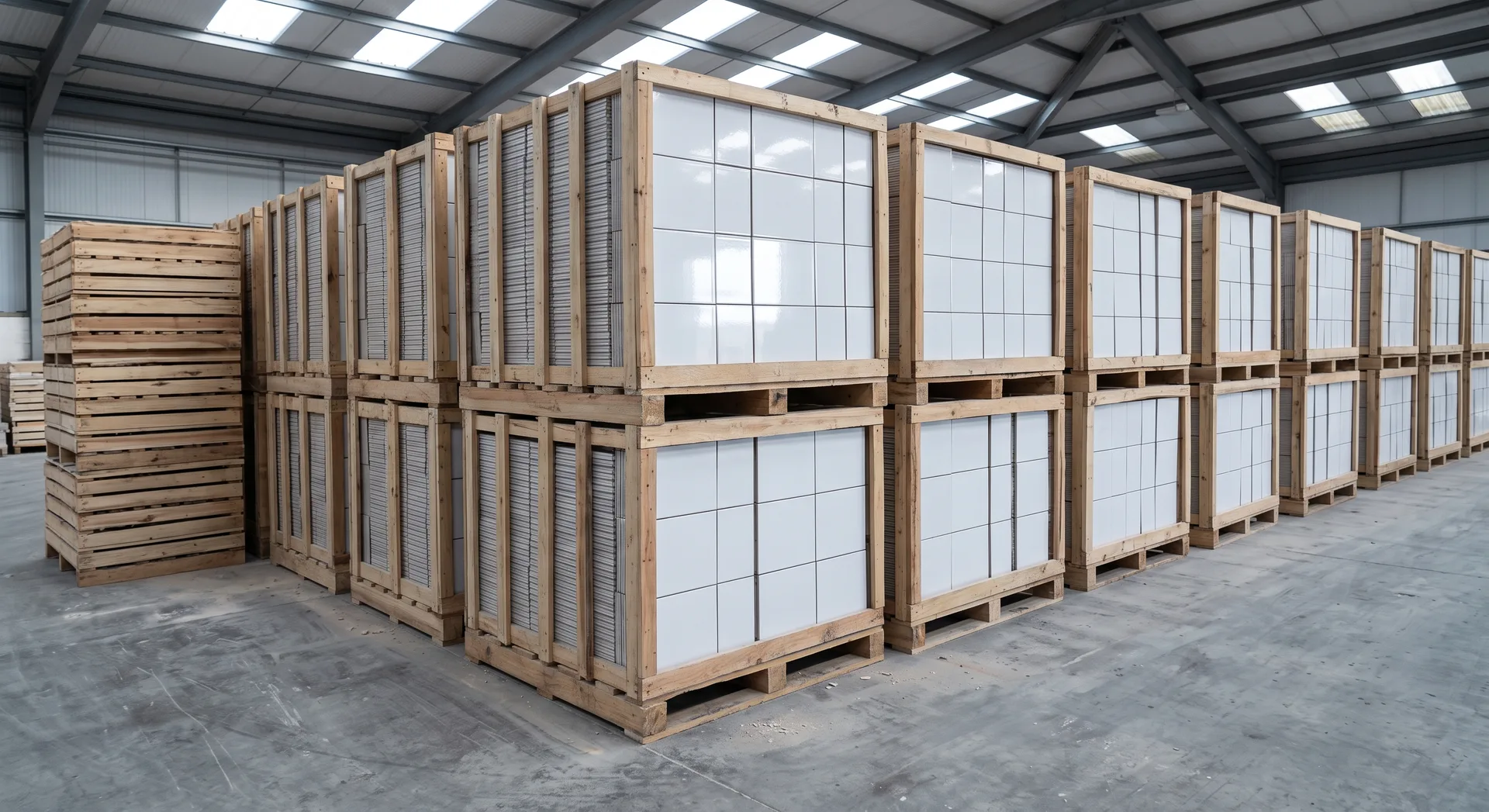
The Zircon Industry Association describes zircon as a whiteness and opacity enhancer in traditional ceramics. Its explanation is optical: fine zircon grains scatter visible light, making ceramics appear white and opaque. The association says that in ceramic tile manufacturing, zircon is mostly used in the form of flour, that is, finely milled, and that in glazes it enhances resistance to abrasion and chemical attack.
Tiles go into buildings, and one producer says so. Iluka Resources, which sells zircon sand and zircon-in-concentrate, calls construction a key end-use market for mineral sands products in its 2025 annual report, and its May 2025 investor presentation says that for mineral sands construction and development are key drivers of demand. In its account of 2025, demand from ceramics was impacted by ongoing weakness in the Chinese property sector, while India and Europe saw more resilient demand.
Iluka's quarterly review to 31 December 2025 adds the regional detail. In China, Iluka reported, ceramics production slowed in December 2025 as many factories suspended operations through January. In Europe, ceramic production remained resilient through the December 2025 quarter, driven by tile exports and renovation activity, Iluka said. In India, Iluka said, the domestic tile market remained stable, but exports were constrained by elevated shipping costs and trade tariffs.
Iluka, May 2025, on mineral sands: "construction and development are key drivers of demand"
Refractories and foundry: furnaces and moulds
The second group of uses sits in heat. The association lists zircon refractory products including firebricks or refractory linings for glass and metal furnaces, and among the properties it gives for zircon and zirconia in that service are low solubility in molten silica and molten metal and chemical inertness.
The foundry use is related. The association says zircon is used in the foundry industry in sand and investment casting, and USGS gives one reason: zircon used for facings on foundry molds increases resistance to metal penetration.
For foundry, Iluka's December 2025 quarterly reported that in the US, demand from industrial activity slowed, particularly in the foundry sector.
Both uses also have partial exits. USGS reports that chromite and olivine can substitute for zircon for some foundry applications, and that dolomite and spinel refractories can also substitute for zircon in certain high-temperature applications. It adds that zircon foundry mold cores and spent or rejected zirconia refractories are often recycled but could not be quantified. USGS puts a figure on neither substitution nor recycling.
Chemicals, zirconia and metal
The last group of uses turns zircon into something else. The association describes zircon as a raw material in the production of fused and chemically derived zirconia, and says that "a growing portion of the zircon mined worldwide" is used to extract zirconium and hafnium metals, a share the association does not quantify or date.
Who publishes the split
The percentage split used here comes from a producer. An Iluka investor presentation of 7 May 2025, with the source line "Iluka and TZMI" (TZMI being a consultancy) and no year or period stated, put industry demand for zircon at ceramics 46%, refractory and foundry 29%, fused zirconia and chemicals 23% and other 2%. On the same slide (Iluka and TZMI, no year stated), Iluka's own sales were ceramics 50%, fused zirconia and chemicals 35%, refractory and foundry 11% and other 4%.
The slide labels the two charts "Industry demand" and "Iluka sales", so a share quoted without saying which it is cannot be interpreted safely. USGS supplies an order of uses, and the shares used here come from a company and the consultancy it cites. On this publication's reading, the public picture of zircon demand is assembled largely from producers, their industry association and the consultancies they draw on.
What buyers did with uncertainty
In its December 2025 quarterly review, Iluka described zircon buyers as cautious. It said macroeconomic uncertainty continues to weigh on business and consumer confidence, influencing customer buying patterns, with customers generally cautious, maintaining lean inventories. In the same December 2025 review, Iluka said that in zircon-in-concentrate sales, the market had sought lower quality and cheaper cost material to help manage profitability.
Related
- Supply & Demand
- Processing Capacity
- Recycling
- Global Trade
- Construction
Sources
- PRIMARYU.S. Geological Survey, Mineral Commodity Summaries 2026, Zirconium and Hafnium (February 2026, current edition; 2025 data). PDF p. 1, Domestic Production and Use: ceramics the leading end use for zircon in the United States; foundry sand, refractories and zirconium chemicals as other primary uses. PDF p. 1, Recycling: foundry mould cores and spent or rejected zirconia refractories often recycled but not quantified. PDF p. 2, Substitutes: chromite and olivine for some foundry applications; dolomite and spinel refractories in certain high-temperature applications.
- PRIMARYU.S. Geological Survey, Mineral Commodity Summaries 2025, Zirconium and Hafnium (January 2025; 2024 data; superseded by the 2026 edition). Printed p. 204, Domestic Production and Use: leading and other end uses for zircon.
- PRIMARYGambogi, J., and Sangine, E.S., U.S. Geological Survey, 2020 Minerals Yearbook: Zirconium and Hafnium [Advance Release], released February 2025, 2020 data. Printed p. 86.1: global leading end uses for zircon in descending order of quantity; zircon facings on foundry moulds and resistance to metal penetration.
- SECONDARYZircon Industry Association, 'Ceramics' web page: zircon as a whiteness and opacity enhancer; light scattering by fine grains; use as flour in tile manufacturing; resistance to abrasion and chemical attack in glazes. Industry-body description, attributed.
- SECONDARYZircon Industry Association, 'Refractories' web page: firebricks and refractory linings for glass and metal furnaces; properties of zircon and zirconia in refractory use; zircon in sand and investment casting. Industry-body description, attributed.
- SECONDARYZircon Industry Association, 'Zircon applications' web page: zircon as a raw material for fused and chemically derived zirconia; a portion of mined zircon used to extract zirconium and hafnium metals (unquantified, undated). Industry-body description, attributed.
- SECONDARYIluka Resources Limited, Annual Report 2025 (year ended 31 December 2025). Printed p. 8, Chair and Managing Director letter: construction a key end-use market for mineral sands products. Printed p. 17, Zircon: ceramics demand and the Chinese property sector; India and Europe more resilient. Company material, attributed.
- SECONDARYIluka Resources Limited, Quarterly Review to 31 December 2025, ASX announcement, 29 January 2026. Zircon market commentary by region (China, Europe, India, US); customer confidence, buying patterns and inventories; zircon-in-concentrate sales. Company material, attributed.
- SECONDARYIluka Resources Limited, Macquarie Australia Conference presentation, 7 May 2025. Slide 4: construction and development as key drivers of mineral sands demand. Slide 5, 'Iluka's sales book', Zircon panel: 'Industry demand' and 'Iluka sales' end-use splits; source line 'Iluka and TZMI'; no year or period stated. Company material citing a consultancy, attributed.
- ANALYSISANALYSIS: the reading that zircon's end uses depend on different parts of the economy (ceramics to building and property, refractories and foundry to industrial activity); and that the public demand picture is assembled largely from producers, their association and the consultancies they cite.Non-public document · no public URL